
Chapter 3: The Industrial Sun – The Syracuse Files and the “Lamp Division” Trap
If Dr. Hodges was a man trying to tame the desert sun, the engineers at General Electric (GE) were men who believed they could build a better one. In the late 1970s and throughout the 1980s, inside a high-security, windowless laboratory in Syracuse, New York, GE’s Lamp Division began a cold, clinical interrogation of the plant leaf. They called this research “Geneponics”.
This was secretive, corporate-funded research, designed not to feed the world, but to find a massive new market for GE’s lighting products. However, the data they generated—the Syracuse Database that eventually found its way to our Inventor — contained the most precise “Source Code” for abundance ever written.
The Interrogation of the Leaf
The GE team, led by principal researchers like Dr. Henry M. Cathey and Dr. Lowell Campbell (whose names appear in USDA and GE technical bulletins from the era), didn’t care about the “romance” of the farm. They treated the plant as a biological transducer—a machine that converts photons into calories.
Working in absolute control, they crunched the numbers on Photosynthetically Active Radiation (PAR). They discovered that if you gave a plant a “Perfect Day”—24 hours of optimal light, precisely 1,200 ppm of CO2, and a root zone flooded with oxygenated nutrients—the results were explosive. They weren’t just “growing” food; they were manufacturing biomass at 5x to 10x the rate of traditional agriculture.
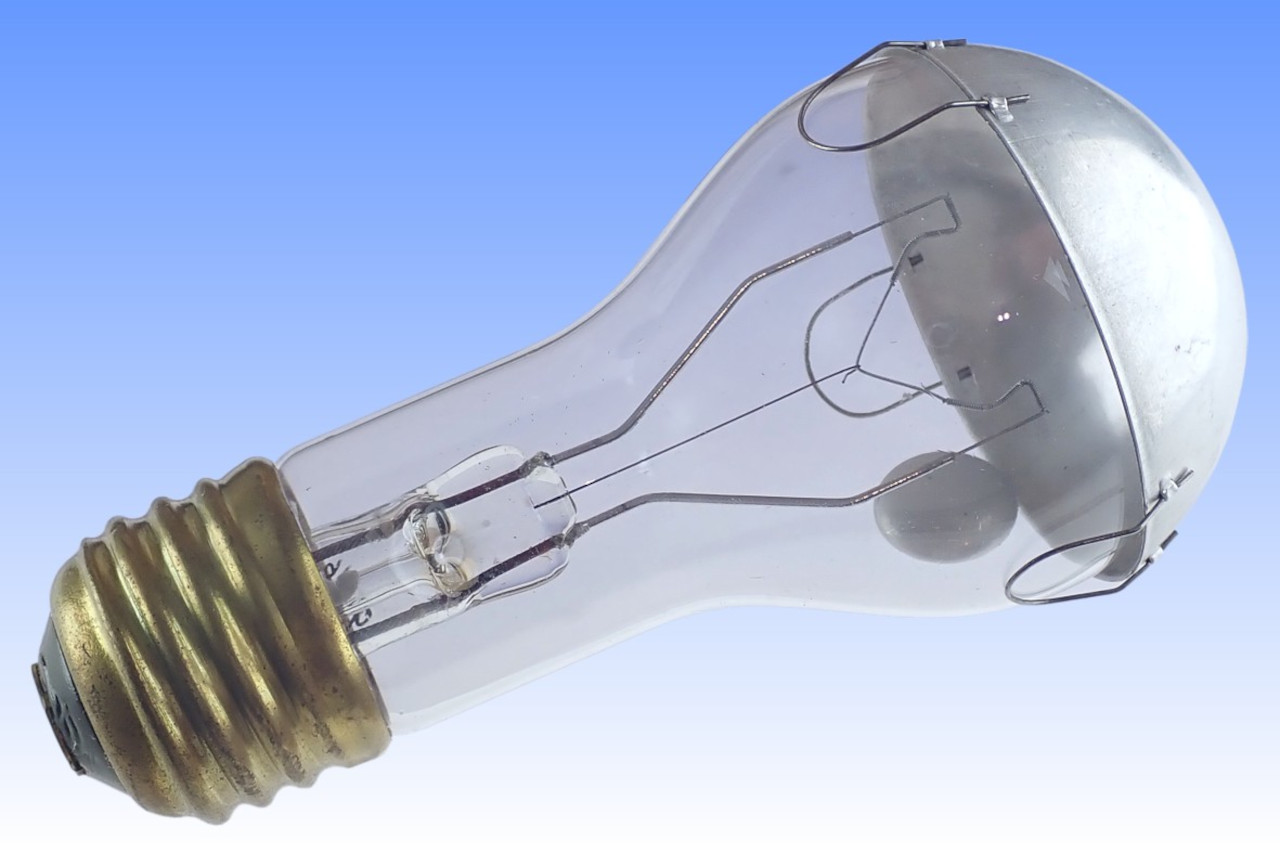 The Breakthrough: The “Liquid-Jacketed” Lamp
But GE hit the same “Invisible Wall” as Hodges: Heat. Their High-Pressure Sodium (HPS) lamps were essentially small stars. To get the light intensity required for these hyper-growth curves, the heat produced would literally melt the plants.
The GE engineers, ever the masters of materials science, developed a radical solution: the Liquid-Jacketed Lamp.
- The Engineering: They encased the blazing arc tube in a double-walled glass sleeve. Between the layers, they pumped a circulating cooling fluid—a mixture of water and specialized chemicals.
- The Physics: The liquid acted as a Spectral Filter. It was transparent to the visible light the plants needed but nearly opaque to the Infrared (IR) radiation.
- The Result: The liquid “stripped” the heat away from the light before it ever touched a leaf. This heat was then carried away by the liquid to a heat exchanger.
This natural power of water, for cooling, was the original vision of our Inventor, and as fate would have it, this GE technology database arrived at his research lab in Montreal, in 1989! The magical power of water, as a radiative filter, would prove to be the underpinning of the SolaRoof technology. GE had proven that liquid could be used as a dynamic thermal shield. They just used it to shield a lightbulb.
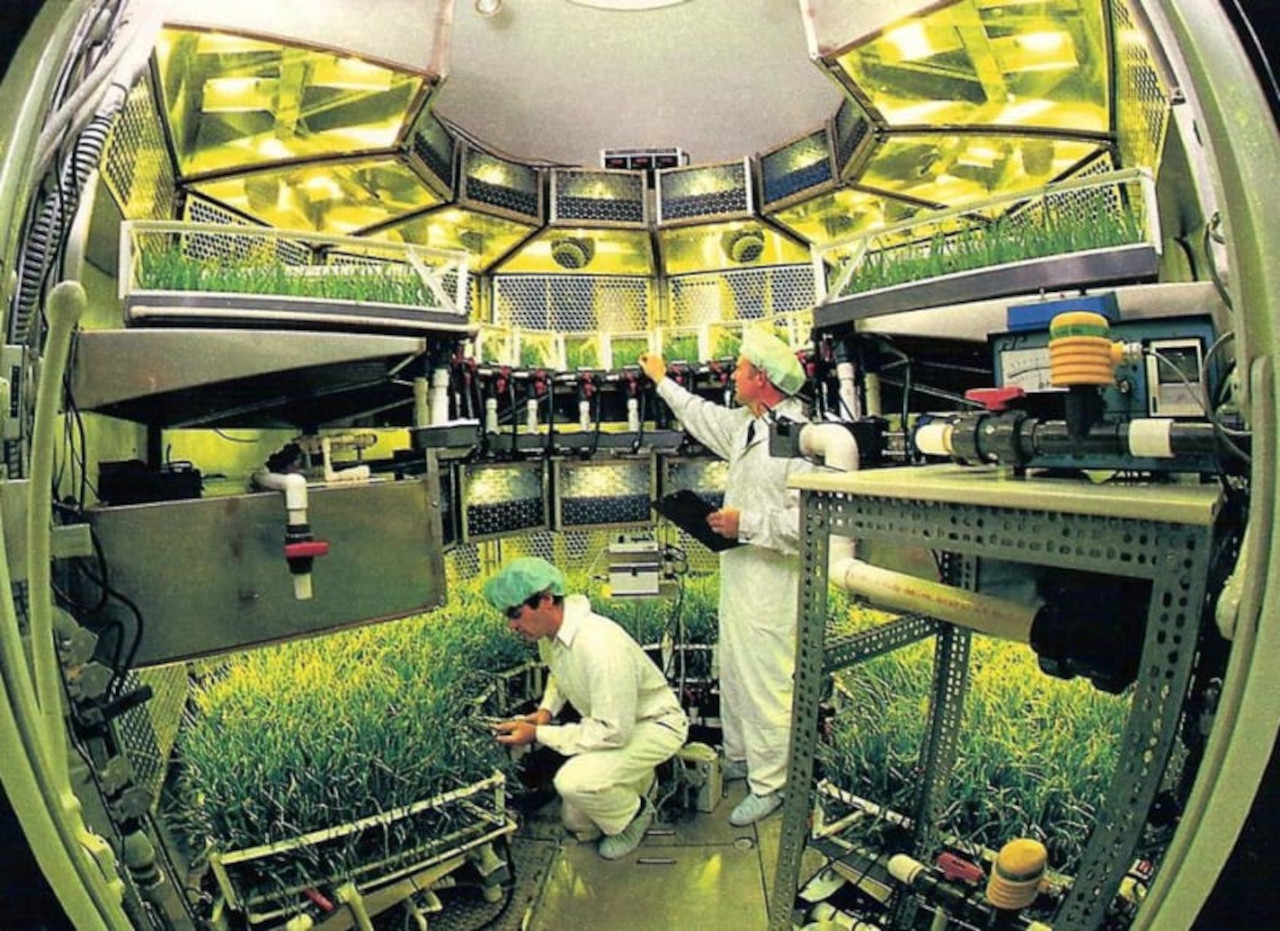 The GE-NASA Connection: The “Secret” Handover
Then in 1991 another link in the chain of innovation: the GE program didn’t just end; it transmigrated. As GE had moved away from the direct commercialization of “Geneponics,” the technical directors and the decades of growth data were funneled into the NASA CELSS (Closed Ecological Life Support System) program.
Public records (such as NASA Technical Reports from 1982-1985) show that GE was a primary contractor for the CELSS program. The research directors who pioneered Geneponics in Syracuse became the architects of NASA’s vision for Mars. They realized that if you could grow food in a windowless room in Syracuse, you could do it in a crater on the Moon.
The Great Suppression: The Denied Future
This is where the investigative trail uncovers a systemic betrayal. By 1993, NASA had the data to prove that a decentralized, high-yield food system was possible. They knew that Liquid Cooling was the key to managing radiation.
But there was a “Disruptive Paradox.” If this technology were applied to the Natural Sun—using the liquid-jacket principle on the roof of a building rather than on a lightbulb—the “Industrial Sun” would be unnecessary.
- The Corporate Logic: GE was in the business of selling lamps and the electricity to run them. A “Sun-Powered” version of their tech was a direct threat to their bottom line.
- The Result: The CELSS files were “shelved.” The “Liquid-Jacket” was buried in technical manuals. The world was directed away from the free abundance of the sun and toward the “Subscription Model” of Vertical Farming—a high-energy, high-cost synthetic environment that remains vulnerable to the power grid.
The Investigative Conclusion
The Syracuse Files are the “Missing Link.” They contain the mathematical proof that we can feed the world on a fraction of the land we currently use. But they also stand as a monument to corporate greed. GE solved the “Yield” problem and the “Heat” problem, but they suppressed the “Sun” solution because it offered too much independence.
The SolaRoof breakthrough is the ultimate reclamation of this lost science. It takes the Liquid-Jacket out of the Syracuse warehouse and puts it back where it belongs: on the transparent envelope of a human habitat, creating the “Heat Shield of Abundance.”
[… to be continued in the next post]