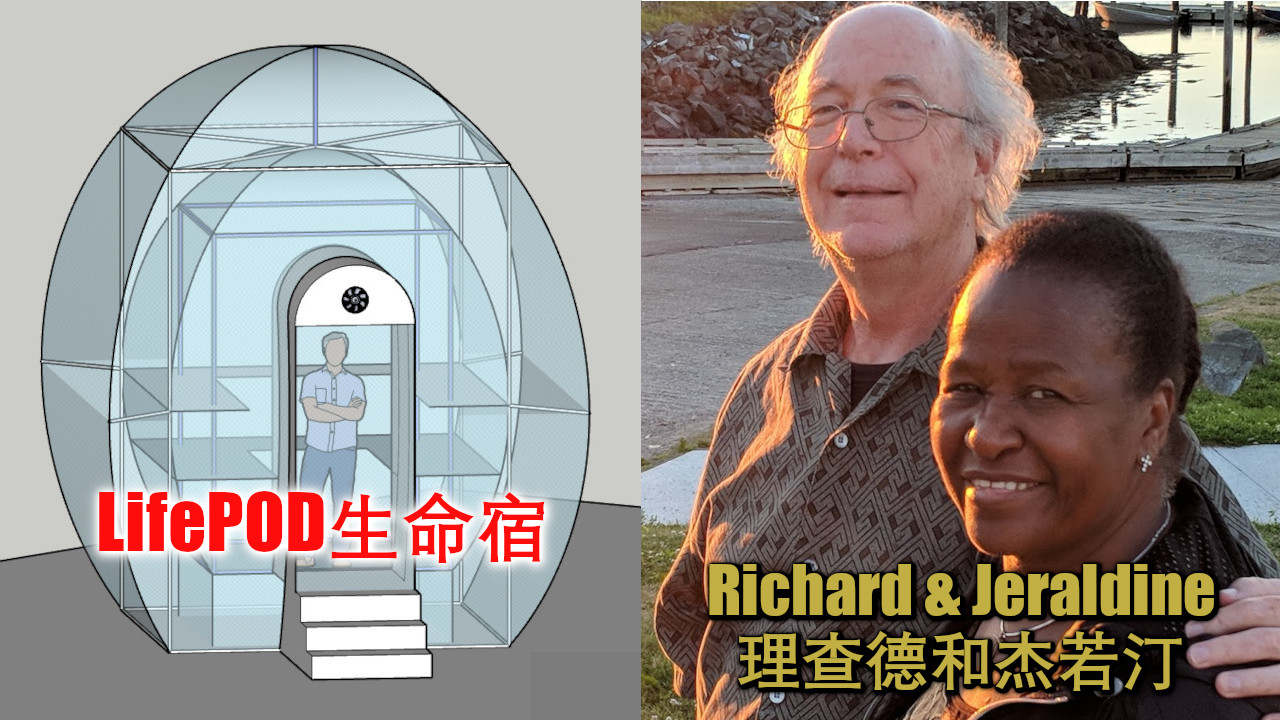
Chapter 4: The Space Standard – The CELSS Betrayal and the Blueprint for Autonomy
By the late 1980s, the “Industrial Sun” of the Syracuse labs and the “Desert Lungs” of Arizona were about to converge at the absolute edge of human capability: the Kennedy Space Center in Florida. This was the era of the NASA CELSS (Closed Ecological Life Support Systems) program—a project that didn’t just aim to grow plants, but to engineer the first 100% autonomous human life-support “organism.”
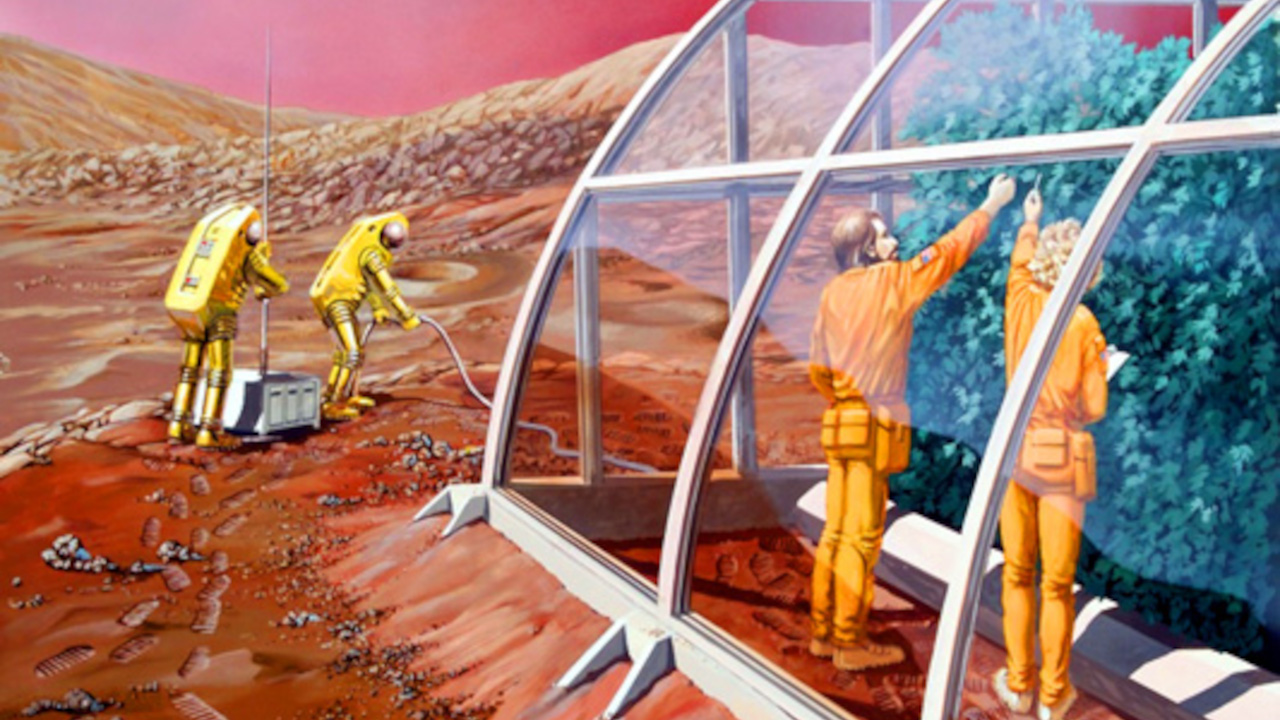
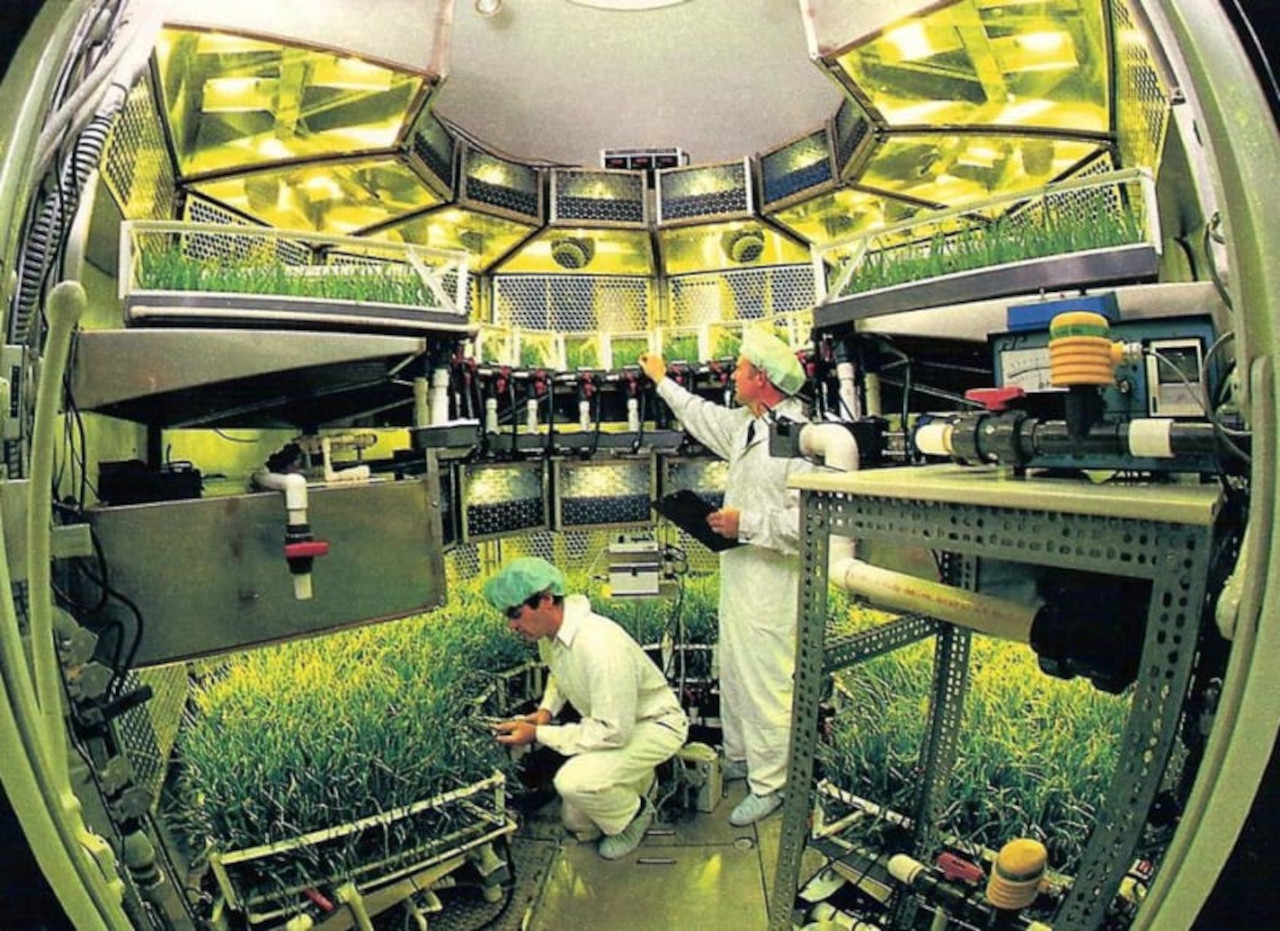
While the public was captivated by the spectacle of the Space Shuttle, a quiet group of visionaries—the modern “Architects of Abundance”—were building the Biomass Production Chamber (BPC). This was a recycled, stainless-steel vacuum chamber from the Mercury missions, converted into a high-tech garden of Eden.
The “Fly on the Wall” in the Airship Hangar
In the early 1990s, as the program reached its technical zenith, a quiet observer entered the inner sanctum. Authorized by the Canadian National Research Council (NRC), this “insider”—let’s call him our Inventor—arrived not as a NASA employee, but as an expert witness to a miracle.
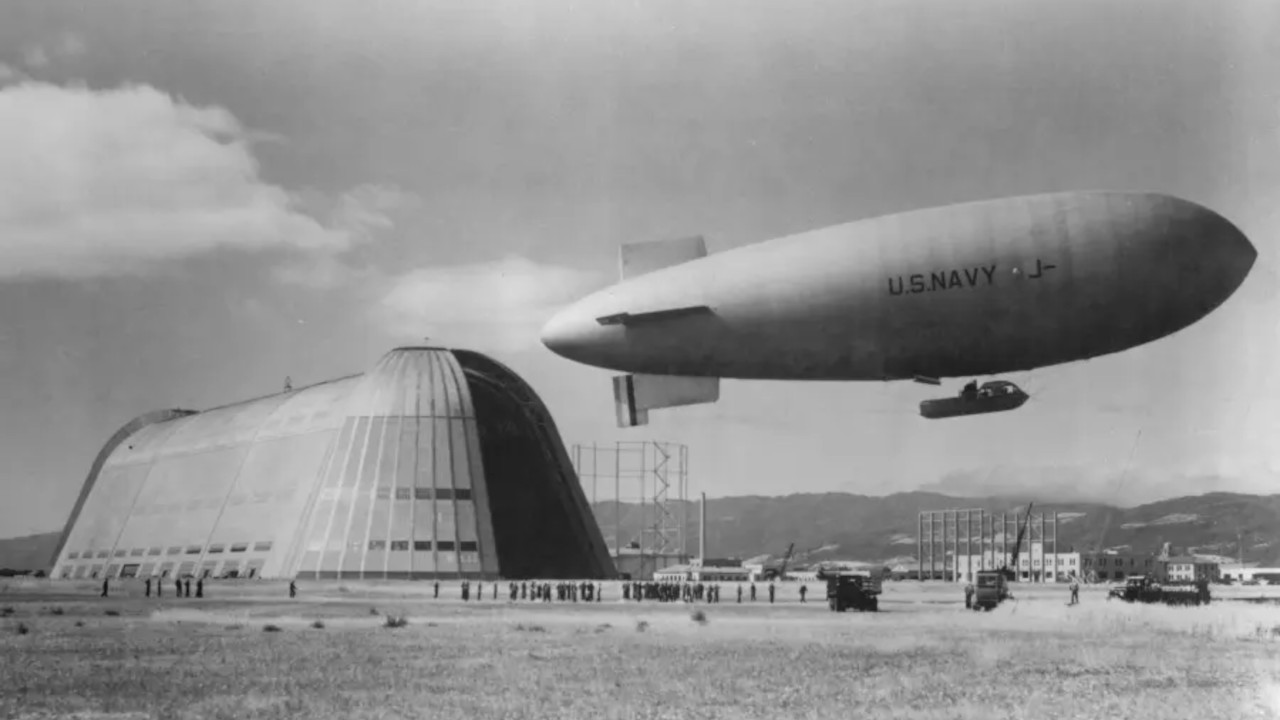
While the primary “Breadboard” project was operational in Florida, our inventor recalls a secondary, equally vital hub of research located in San Jose, at Moffett Field. Operating within the colossal, cathedral-like space of what was once a U.S. Navy Airship Hangar (Hangar 1), NASA Ames research teams were conducting the granular system integration that would make extended tests possible.
Public records from the era (1990-1992) confirm that GE Government Services—the very entity that held the “Syracuse Files”—was the primary contractor at Moffett Field, with researchers like M. Kliss and R. MacElroy leading the “Advanced Life Support Division.” Inside that cavernous hangar, they weren’t just testing plants; they were testing the system logic for a human-rated autonomous habitat.
The “Lock-In” Miracle: 1991–1996
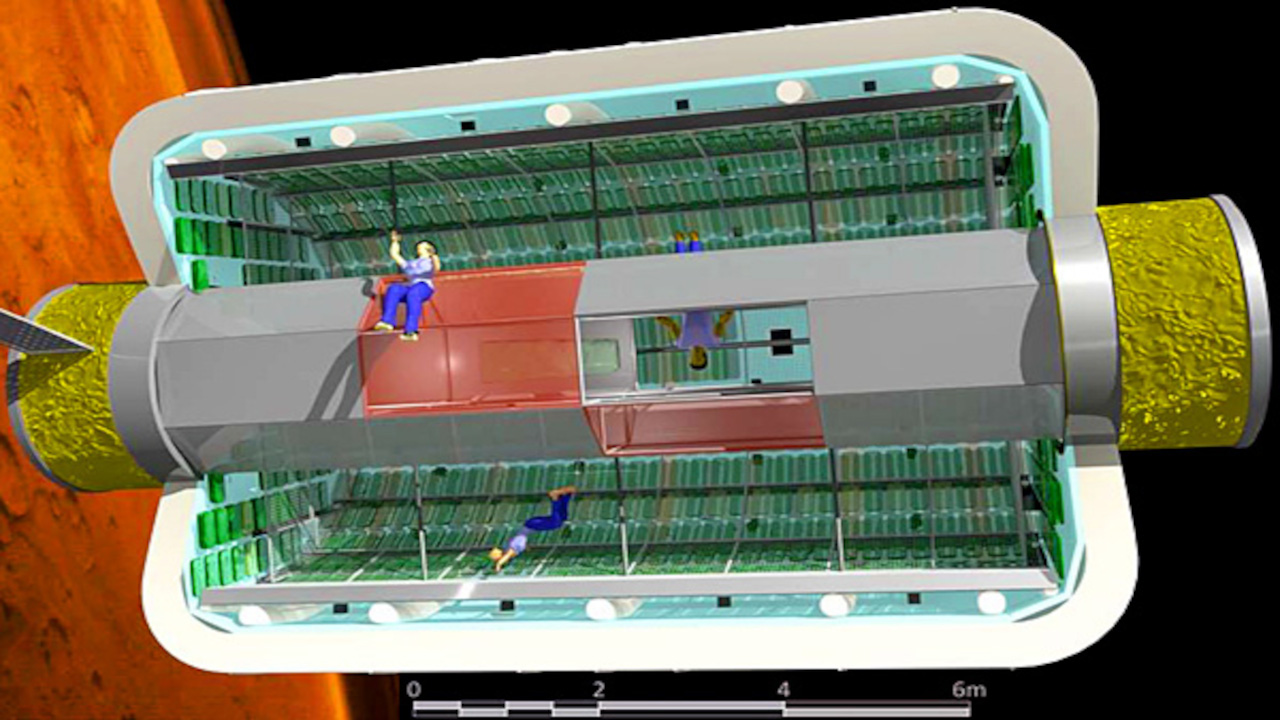
This operational testing was a human life-or-death interrogation of the “closed” environment. The astronaut volunteers—human “guinea pigs” in the best sense—were sealed inside the “living” module for extended periods of up to 6 months duration. This wasn’t a simulation; it was a verification of a new circular biological process, never before created with such engineering rigor, or observed and documented with such scientific precision.
The internal workings were a technical masterpiece:
- Atmospheric Reciprocity: The plants acted as a “living lung.” They inhaled the CO2 exhaled by the occupant and returned 99.9% pure Oxygen. The balance was so perfect it achieved a 1:1 Gas Exchange Ratio.
- The Water-from-Air Harvest: Every drop of water the occupant consumed was recovered. Every artificial “day” the plants acted as biological distillers, taking in grey water and “breathing out” liters of pure, distilled water through transpiration. The occupant lived on a “Water-from-Air” supply that was 5 times greater than their actual consumption needs.
- The Nutrient Circle: Through Anaerobic Digestion, the inedible parts of the plants were converted back into water miscible organic nutrients (colloids) for organic plant production (regenerated food) and Methane (CH4) for production of clean, abundant energy from the new Fuel Cell technology.
The Energy Secret: The Carbohydrate-to-Fuel Cell Bridge
This is where our inventor, watching from the wings, saw the most explosive discovery. NASA had developed Fuel Cell technology specifically to harvest the CH4 produced from the human, plant and food waste.
- The Science: Using Anaerobic Digestion, the carbohydrates in all the “waste” biomass are transformed into CH4 hydrocarbon–a high-energy fuel–that is converted by the Fuel Cell into electricity at 50% efficiency and high-temperature waste heat.
- Supplemented with electricity from the new technology of Photovoltaics, the energy regeneration through the Biogas Fuel Cell, would endlessly power life-support in Space.
- The Implication: The sun together with the synthetic sun (water jacketed GE lamps) comprised the “High-Grade” energy source that made the entire habitat autonomous. This “home to live” science project didn’t just grow food; as a whole system, it was a decentralized power plant.
Our Inventor realized then what the world still hasn’t grasped: a typical family home footprint, built with this know-how, would generate twice the electrical energy it consumed, provide all its own food, and produce a massive surplus of pure water—all while being completely decoupled from the grid.
The Sudden Sunset: Who Killed the Future?
In 1996, just as the circle was closing, the axe fell. The program was abruptly terminated. The official reason was a “redirection of funds” toward the International Space Station.
But our inventor recalls a more chilling explanation from the GE program directors as they were packing up their Moffett Field offices. They spoke of “Big Business” interventions. The discoveries were too disruptive. If the American home became a self-sufficient life-support unit—independent of water services, sewage grids, and power utilities—the “Subscription to Survival” that underpins modern corporate power would be broken.
The Investigative Conclusion
The CELSS program proved that Abundance is a function of Closure. It was a present possibility in 1996, buried under the guise of “Space Research” to protect the linear profits of the Earth-bound economy.
But our inventor was watching. He saw the “Moffett Field” data, he understood the “CH4-to-Fuel Cell” bridge, and he knew that the Sun Paradigm was simply waiting for the right moment to emerge from obscurity.