
Chapter 8: Where do we see answers to the Metacrisis?
The High-Tech Excursions to Nowhere
If the story of the ERL and the New Alchemy Institute was one of idealistic pioneers hitting a thermal wall in the 1970s, the story of the early 21st century is one of sophisticated engineering teams attempting to bypass that wall with brute-force capital and “Nexus” thinking.
Unfortunately, while we are living one heartbeat away from global famine, time, resources and capital have been locked into a recurring failure mode: the pursuit of food abundance through either an “artificial sun” that consumes the balance sheet, or a “natural sun” trapped behind a static, inefficient skin. In this chapter, we trace the lineage of three major excursions—Vertical Farming, the Seawater Greenhouse, and the Sahara Forest Project—to see why, despite their glossy brochures and Royal patronage, they remain beautiful mirages in the desert of sustainability.
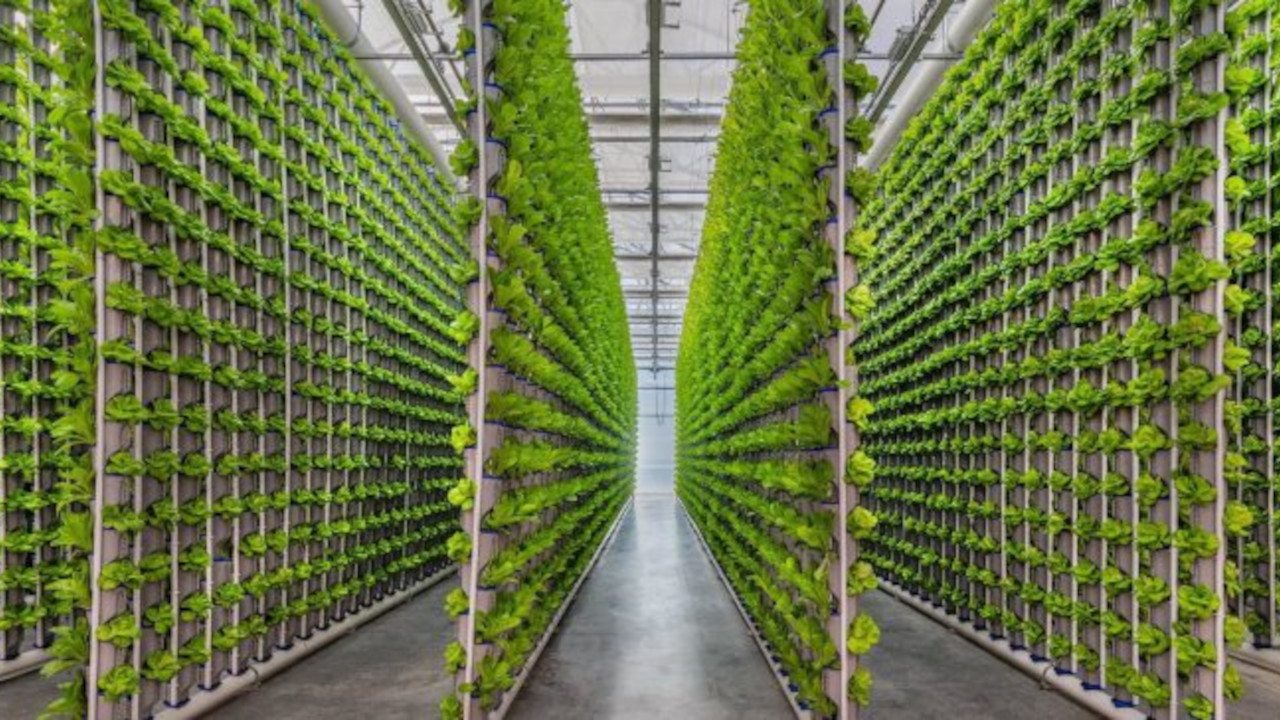
1. The LED Mirage: The Rise and Stall of Vertical Farming
The most seductive of the modern excursions is Vertical Farming. The narrative was perfect for the “Software-as-a-Service” era: move the farm into a windowless warehouse, stack the crops to the ceiling, and control every photon with LEDs.
The Players:
The movement was spearheaded by academic evangelists like Dr. Dickson Despommier of Columbia University, but the “story” was written by Silicon Valley-backed titans like AeroFarms and Plenty. These companies raised hundreds of millions of dollars, promising to disrupt agriculture by removing the “unpredictability” of nature.
The Technical Complexity:
The engineering here is a marvel of automation and hydroponic precision. However, it relies on a “Subscription to Survival.” By replacing the free, massive energy of the sun with LED arrays, these facilities became some of the most energy-intensive buildings on the planet.
- The Physics: Photosynthesis requires a staggering amount of light. To mimic the sun, these farms require constant electrical input, which generates immense waste heat.
- The Cooling Loop: Instead of a natural “Heat Shield,” these projects use industrial HVAC systems to fight the heat generated by their own “artificial suns.”
Current Status:
The “LED Hype” has hit a brutal reality. In 2023 and 2024, the sector saw a “Vertical Farming Winter.” AeroFarms filed for Chapter 11 bankruptcy (later restructuring), and AppHarvest collapsed entirely. The contribution to ending global hunger has been negligible; they remain boutique producers of $7 boxes of arugula for high-end grocery stores, unable to compete with the thermodynamics of a field—or a SolaRoof.
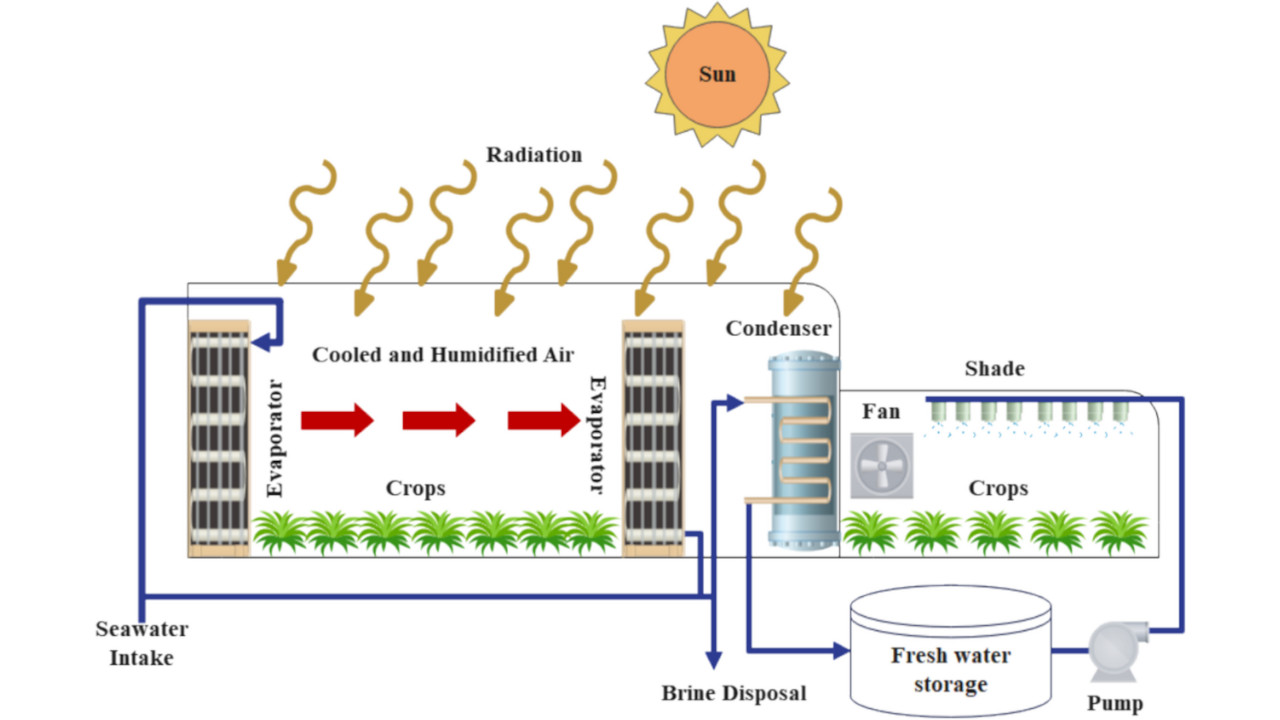
2. The Seawater Greenhouse: The Condenser Trap
While Vertical Farming hid from the sun, the Seawater Greenhouse tried to embrace the most hostile sun on Earth—the coastal desert.
The Players:
The project was led by Charlie Paton, but the technical soul of the operation included mechanical engineer Bill Watts. Interestingly, Watts joined the team after his time with our Inventor’s Evolve research project in the UK, where he had already begun grappling with the limitations of traditional greenhouse skins.
The Technical Complexity:
The Seawater Greenhouse is a reenactment of the “Pad-and-Fan” cooling postulated 40 years ago at the ERL, but with a high-tech twist. It uses seawater trickling over evaporative pads to cool the incoming air. However, to solve the “water loss” problem inherent in ventilation, they added a costly “humidity condenser” at the outlet side.
- The Failure Mode: The condenser is a complex heat exchanger that attempts to “catch” the water vapor before it escapes. It adds immense capital cost and technical frailty.
- The Static Skin: Like its predecessors, it relies on moving massive volumes of air through a structure with a static (passive) glazing overhead. It lacks the dynamic, liquid radiative control (the “liquid/bubble heat shield”) that can instantly shift a building’s roof from being a solar collector into an active, cool, cloud-like shading and insulating device.
Current Status:
While a few demonstration sites (like the one in Tenerife) proved the concept was biologically possible, the technology has struggled to achieve commercial “escape velocity.” It remains an expensive, niche solution for coastal deserts, contributing more to academic papers than to the global food supply.
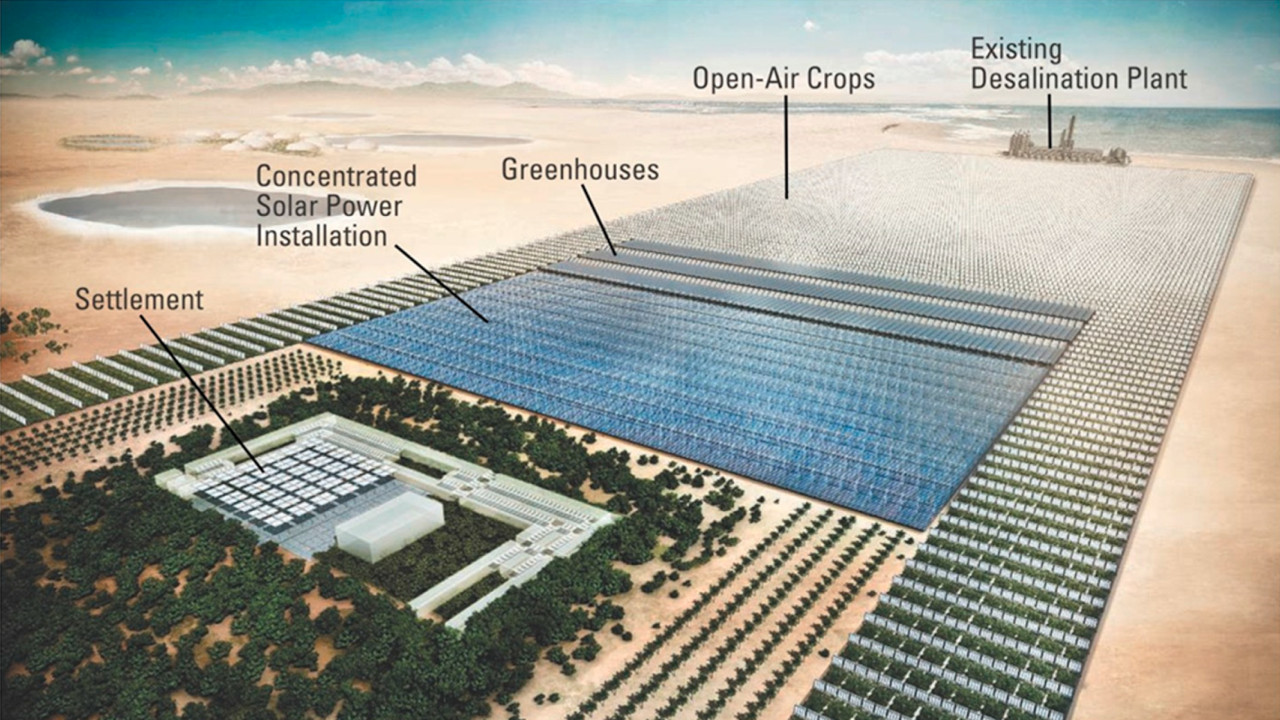
3. The Sahara Forest Project: The Royal Spectacle in Jordan
The most ambitious “Nexus” project to date emerged from Oslo, Norway: the Sahara Forest Project (SFP). It sought to combine the Seawater Greenhouse with Concentrated Solar Power (CSP) to create a “restorative” oasis.
The Players:
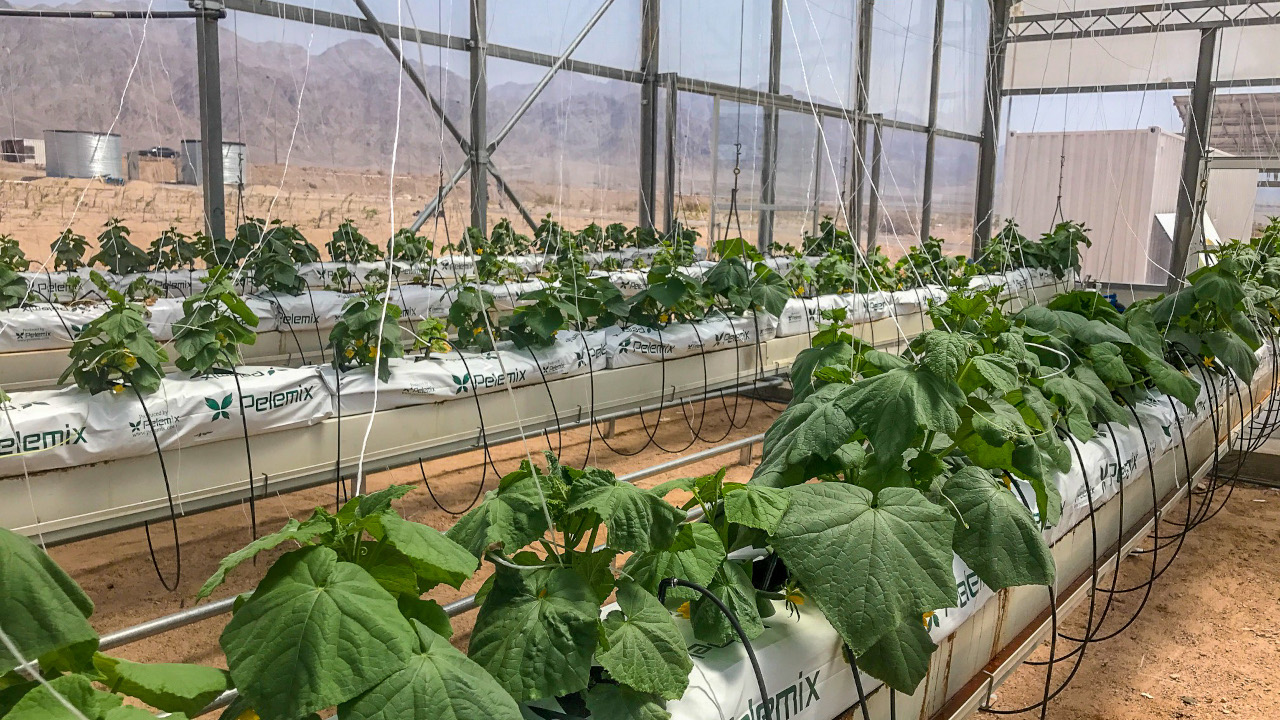
The project was driven by the Bellona Foundation, an environmental “think tank” led by the colorful and indomitable Frederic Hauge. Hauge is a master of political theater and high-level networking; he successfully won the enthusiastic support of the Royal Family of Jordan, leading to the 2017 inauguration of a demonstration facility in Aqaba.
The Technical Complexity:
The SFP is the ultimate “High-Investment” excursion. It links seawater cooling, solar thermal power, and salt production into a single, integrated loop.
- The Synergy Trap: While the “Nexus” theory is sound, the operational complexity is staggering. If the SFP system falters, the cooling suffers; if the seawater pumps fail, the “oasis” dies.
- The Missing Piece: Even with Royal backing and Norwegian sovereign fund participation, the project still utilizes the Static Building Envelope. It fights the desert sun with complexity rather than with the elegant, low-energy physics of a liquid-bubble membrane.
Current Status:
The Jordan project remains operational as a “demonstration” and research hub, occasionally exporting peppers to Europe. However, it has not “greened the desert” at scale. It exists as a top-down, institutional monument—a “spectacle of light” that is too expensive for a refugee camp and too complex for a local farmer to maintain.
The Totality of the Failure
In each of these excursions, we see the same tragic choice. One path leads to the Artificial Sun, where projects die due to the crushing cost of electricity (Vertical Farming). The other path leads back to the Real Sun, but without the “Active Liquid Radiative Control” required to manage it.
By missing the Bubble Efficiency and the Liquid-Jacket concept, these projects are forced to over-engineer their way out of a thermal crisis. They are building “spaceships” when they should be building “skins.” They contribute to our understanding of the problem, but they fail the ultimate test: providing food abundance that is uninterruptible, decentralized, and sustainable in any climate, no matter how cold or hot.
The SolaRoof, as we will see, remained the “road not taken”—the path of high closure and low complexity.
(To be continued…)